



Choosing the Right Compound for Families: 7 Criteria for an Ideal Home
Introduction: Why Is Choosing the Right Compound a Life-Changing Decision for Families?
Choosing a home is no longer a simple decision based solely on price or unit size. Today, selecting the right compound for your family has become a strategic decision that directly impacts quality of daily life, children’s safety, and long-term psychological and social stability. With rapid urban expansion and the growing number of residential projects, families are often faced with dozens of options that may look similar on the surface but differ significantly in real value, services, and security standards.
If you are searching for a place that offers a healthy environment for your children, integrated services, and genuine security away from noise and congestion, making the right decision has never been more important. This article is not just a collection of generic tips—it is a comprehensive guide that provides accurate insights, practical comparisons, and realistic data to help you make an informed housing decision.
In this guide, you will learn how to properly evaluate different compounds, identify their strengths and weaknesses, and choose a home that meets your family’s current and future needs. Get ready to discover the 7 essential criteria that will help you choose the right compound and ensure a comfortable, safe, and stable lifestyle for your family—free from unpleasant surprises.
What Does Choosing the Right Compound for Families Really Mean?
When discussing the right compound for families, the concept goes far beyond gated entrances and security guards. It involves a comprehensive evaluation of an integrated residential ecosystem that ensures a high quality of life for all family members.
An ideal family compound provides a safe environment for children through well-equipped playgrounds, green spaces, and educational and recreational activities. It also simplifies parents’ daily routines by offering essential services such as supermarkets, pharmacies, schools, nurseries, and medical centers either within the compound or in close proximity.
Additionally, the compound’s urban design should prioritize privacy by clearly separating public and private spaces, while offering safe walking paths and internal transportation options. A socially harmonious residential community is also an important factor, as it fosters a sense of belonging and stability and helps children build healthy social relationships.
In short, choosing the right compound for families means finding the right balance between security, comfort, daily convenience, access to education and healthcare, and opportunities for recreation and social interaction—rather than focusing solely on visual appeal or brand name.
Why Do Some Families Fail to Choose the Right Family Home?
Market experience shows that a large percentage of buyers regret their family housing decision after only a few years. In most cases, this regret stems from avoidable planning mistakes, including:
- Focusing solely on price: Without considering quality-of-life factors such as proximity to schools, hospitals, shopping centers, or ease of access to main roads and public transportation.
- Ignoring children’s future needs: Such as playgrounds, sports clubs, educational and entertainment facilities, and a safe social environment suitable for their growth.
- Being misled by green spaces or unused facilities: Some projects look attractive on paper but lack effective management and ongoing maintenance.
- Failing to assess the surrounding area: Including traffic congestion, noise levels, and nearby services, all of which directly affect daily comfort and livability.
- Making emotional decisions influenced by marketing offers: Without comparing multiple options or conducting a thorough evaluation of the project’s real advantages.
For this reason, choosing the right compound for families should be a comprehensive analytical process that considers comfort, safety, education, healthcare, and recreational services—ensuring long-term satisfaction rather than short-term visual appeal or temporary discounts.
Criterion One: Location and Its Impact on Daily Life
How Does Location Influence the Choice of the Right Compound?
Location is the cornerstone of any residential decision, as it directly affects family comfort and daily mobility. When choosing the right compound for families, several key factors must be considered:
- Proximity to schools and universities: Living close to educational institutions significantly reduces commuting time, freeing up valuable hours for family activities and rest. For example, a compound located 10 minutes from school can save 5–7 hours per week compared to longer commutes.
- Easy access to main roads: Being close to major highways and public transportation reduces daily stress and facilitates commuting to work, universities, and essential facilities.
- Distance from noise and pollution sources: A quiet location away from factories and highways provides a healthier environment for children and enhances family comfort.
- Nearby essential services: Access to hospitals, pharmacies, shopping centers, public parks, and entertainment venues makes daily life smoother and more efficient.
- Balance between work and leisure: A location that offers proximity to workplaces and recreational areas improves overall quality of life and reduces exhaustion caused by long travel times.
In summary, location does not only determine accessibility—it shapes daily living standards and significantly affects the family’s physical and psychological well-being, making it one of the most critical criteria when choosing the ideal compound.
Criterion Two: Security Inside the Compound
Security is one of the most fundamental pillars when choosing the right compound for families. It goes far beyond having guards at the gate and involves an integrated security system that ensures the safety and peace of mind of all residents around the clock.
Elements of Real Security Inside a Compound
- Smart, monitored entrance gates: Prevent unauthorized access and organize visitor entry safely and efficiently.
- Surveillance cameras covering key areas: Ensure continuous monitoring of public spaces and pathways, reducing incidents and enhancing overall safety.
- Child-safe internal roads: Properly designed pathways separated from fast-moving vehicles, with clear signage and protected play areas.
- Rapid emergency response: Trained security teams and integrated monitoring systems capable of handling emergencies promptly.
- Adequate lighting in public areas: Well-lit walkways and streets reduce nighttime risks and improve safety for pedestrians and vehicles.
- Advanced alarm and protection systems: Including fire detection systems and medical emergency alerts for fast response to critical situations.
Market studies indicate that compounds with fully integrated security systems experience up to 40% fewer conflicts and behavioral issues compared to open residential areas, along with higher resident satisfaction and psychological comfort. In short, security within a compound is not a luxury—it is a necessity for long-term family stability.
Criterion Three: Family-Oriented Services and Amenities
The Difference Between Decorative and Functional Services
Not all advertised services within a compound provide real value. When choosing the right compound for families, it is essential to assess how effective and functional these services truly are—not just whether they exist.
Key questions to ask include:
- Is the social club actively operating and offering activities suitable for all age groups?
- Are there designated children’s play areas with proper supervision and safe flooring?
- Are medical services such as clinics or pharmacies available within the compound or nearby?
- Are there sports and recreational facilities suitable for the entire family, such as football fields, walking tracks, or outdoor fitness areas?
Practical insight: Compounds with fully integrated internal services can reduce a family’s monthly spending on transportation and external services by 15–20%, while significantly improving daily convenience and reducing time pressure on parents.
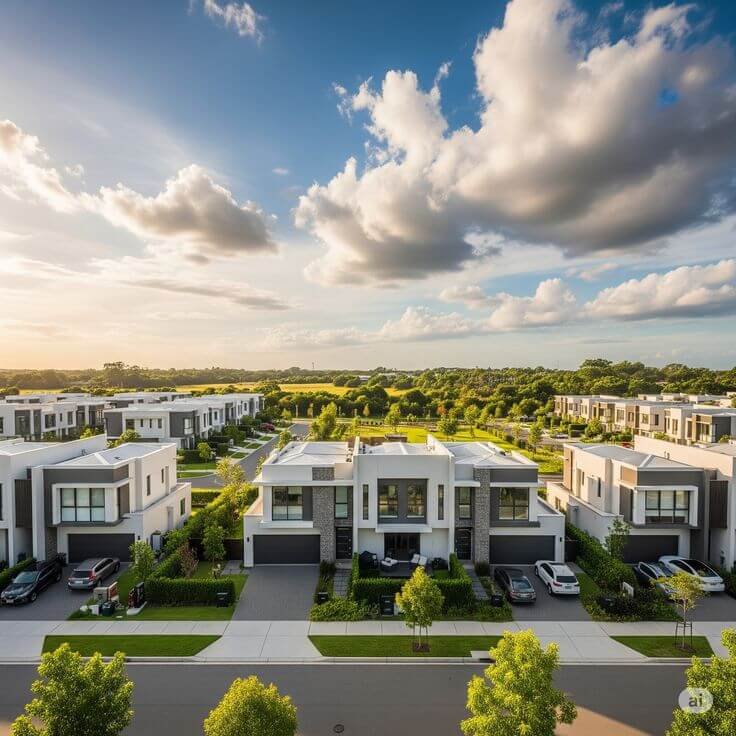
Criterion Four – Urban Design and Green Spaces
Why Is the Green Area Ratio Alone Not Enough?
Many residential projects advertise high green space ratios, but actual usability is the true factor in evaluating a compound’s quality for families. Good urban design is not limited to landscaping aesthetics; it also includes:
- Usable open spaces such as large gardens, playgrounds, and tree-lined walkways that encourage children to move, play, and stay active.
- Smart building distribution that ensures privacy, reduces noise, and allows easy access to various facilities.
- Natural lighting and proper ventilation within residential units and public areas, which enhance comfort and support residents’ mental and physical well-being.
In short, choosing the right compound means selecting an environment that promotes children’s physical and social interaction—not just green areas designed for visual appeal.
Criterion Five – Schools and Educational Services
The Impact of Schools on Housing Decisions
The presence of schools within or near a compound directly improves quality of life and plays a major role in family decision-making. Key benefits include:
- Reduced daily commuting time for children, saving valuable hours that can be invested in studying, recreational activities, or family time.
- Higher safety levels due to shorter travel distances and reduced risks associated with long commutes.
- Long-term family stability, as proximity to schools makes it easier to maintain a consistent educational path without additional pressure.
Market data shows that residential units located near schools can increase in market value by 10–18% compared to those farther away, making proximity to education a smart long-term investment.
Criterion Six – Residential Community and Neighbor Profile
Why Does the Surrounding Community Matter for Families?
Living in a compound extends beyond the property itself to include the nature of the residents and the overall community. Carefully choosing the residential community has a significant impact on families—especially children—because it:
- Creates a safe and healthy environment for children to play and engage socially.
- Enhances the family’s sense of belonging and peace of mind through neighbors with similar social values and living standards.
- Reduces the likelihood of residential conflicts and increases overall resident satisfaction.
Choosing the right compound cannot be separated from the nature of the community within the project—a factor often overlooked despite its major influence on daily quality of life.
Criterion Seven – Value for Money
How to Evaluate Price Smartly
When choosing a compound for families, the decision should not be based solely on the lowest price, but on the real value received in return. Smart price evaluation includes:
- Comparing services versus cost: Does the compound offer security, educational facilities, children’s play areas, and well-managed maintenance?
- Considering hidden costs such as transportation expenses, external services, and ongoing maintenance fees.
Practical Comparison:
- A lower-priced compound without real services may increase the family’s burden in the medium term.
- A compound priced 10% higher but offering integrated security and services often becomes the more cost-effective and comfortable option in the long run.
In summary, a smart decision is based not on price alone, but on actual value and the daily living experience the compound provides for the family.
Comparison: Living Inside a Compound vs. Outside for Families
| Aspect | Living Inside a Compound | Living Outside a Compound |
|---|---|---|
| Security | High | Medium to Low |
| Services | Integrated | External |
| Children’s Environment | Safe | Less Safe |
| Stability | Higher | Variable |
This comparison clearly shows that choosing the right compound for families offers a significant advantage in overall quality of life.
Common Mistakes to Avoid When Choosing the Right Compound
Many families make common mistakes when selecting a compound, which can later lead to costly decisions or a less satisfactory living experience. To avoid these issues, pay attention to the following:
- Relying solely on the developer’s name: A well-known developer does not automatically guarantee quality. It is essential to visit the project, review the developer’s track record, and assess current residents’ satisfaction.
- Ignoring maintenance fees and monthly charges: Some projects offer attractive initial prices but impose high maintenance fees or unexpected service costs. Always calculate the actual monthly or annual cost before deciding.
- Failing to visit the project at different times of the day: Morning, evening, and weekend visits help assess traffic, noise levels, and the overall atmosphere accurately.
- Neglecting to read contracts and terms carefully: Some contracts include unclear clauses related to maintenance or services. Reviewing all legal and financial terms—or consulting a real estate lawyer—is highly recommended.
- Overlooking community evaluation: Understanding the resident profile and lifestyle helps avoid surprises and ensures compatibility with your family’s values and daily routine.
By avoiding these mistakes, families can make an informed housing decision that minimizes financial risks and enhances daily living quality within the compound.
Conclusion: How to Make the Final Decision with Confidence
Ultimately, choosing the right compound for families is not just a purchase—it is a long-term investment in your family’s comfort and your children’s future. The right decision does not depend on attractive advertising or developer reputation alone, but on a careful and structured evaluation of the key criteria that define real quality of life.
If you properly assess:
- Location, including proximity to schools, essential services, and ease of daily commuting,
- Security, through integrated safety systems and continuous monitoring,
- Actual family services and amenities, not just decorative features,
- Urban design and truly usable green spaces,
- Residential community and neighbor profile,
- Value for money, considering real costs and maintenance fees,
you will be able to choose a compound that offers genuine stability, safety, and peace of mind—not just a new address.
Practical Advice:
Take time to compare multiple options, visit them in person, and document your observations for each criterion. This systematic approach significantly increases your chances of making the right decision and avoiding future surprises.
Start your journey today toward choosing the ideal compound for your family.
Don’t let the opportunity pass without taking a step toward comfort and stability. Contact us today to explore the best family-friendly compounds available and receive personalized advice to evaluate each project based on security, services, location, and value for money.
Invest your time wisely and make choosing your new home a confident, enjoyable experience that ensures your family’s comfort and your children’s happiness for years to come.
What is the most important criterion when choosing the right compound for families?
Location is the primary criterion, especially proximity to schools, essential services, and ease of daily commuting.
Is security in a compound limited to having guards only?
No. Security includes integrated systems such as surveillance cameras, controlled entrances, child-safe internal roads, and quick emergency response.
How can I differentiate between decorative and functional services?
Check whether facilities are actually operating, such as social clubs, children’s play areas, and real medical services inside or near the compound not just listed in brochures.
Are green space ratios alone sufficient to evaluate a compound?
No. You should assess how usable these spaces are, whether they include children’s play areas, and if they offer proper lighting and ventilation.
How does proximity to schools affect housing decisions?
It reduces daily commuting time, increases children’s safety, improves family stability, and can increase property value by 10–18%.
Why is the residential community and neighbor profile important?
Living among families with similar values and living standards creates a healthier environment for children and strengthens the sense of belonging.
How can I evaluate price versus value?
Don’t focus only on the lowest price. Compare what you get in terms of services, security, and quality, while accounting for maintenance fees and hidden costs.
What common mistakes should be avoided when choosing a compound?
Relying only on the developer’s name, ignoring maintenance costs, not visiting the project at different times, and skipping contract review.
Is it necessary to visit the compound before purchasing?
Yes. Visiting at different times of the day helps you evaluate traffic, noise levels, and the real living atmosphere.
What is the difference between family compounds and open residential projects?
Family compounds usually offer higher security, integrated services, a cohesive community, and safer environments for children.
How do I choose a compound suitable for children?
Look for safe playgrounds, educational and recreational activities, and spaces that encourage movement and social interaction.
Is urban design important?
Yes. Good design ensures privacy, efficient space usage, and proper natural lighting and ventilation.
Why is the availability of medical facilities near the compound important?
It ensures quick access to healthcare, reduces emergency risks, and improves daily quality of life.
How can a compound save time and effort for families?
By being close to schools and essential services and offering internal facilities like supermarkets, pharmacies, and recreational centers.
Can living in a compound increase property investment value?
Yes. Family-oriented compounds near schools and services usually achieve stronger long-term value growth.
How do I choose a suitable residential community?
By selecting a compound with residents who share similar social values and ensuring a healthy environment for children.
Are there differences between compounds in terms of recreational facilities?
Yes. Some offer sports courts, walking tracks, and social clubs, while others provide limited amenities.
How can I verify maintenance quality and facility management?
Check feedback from current residents, visit the compound, and evaluate the management company’s performance.
Does the compound’s location affect daily comfort?
Absolutely. Proximity to transportation, markets, parks, and services significantly improves daily convenience.
What is the most important advice before making the final decision?
Compare several options, visit projects in person, evaluate each criterion carefully, and consult a real estate expert if needed.

