



5. Challenges in Both Real Estate Markets (Egypt vs UAE – 2026)
It is important for investors to understand that each market has its own risks:
| Aspect | Challenges in Egypt | Challenges in the UAE |
|---|---|---|
| 1. Economic Stability | The Egyptian pound’s depreciation impacts construction costs and property pricing, requiring investors to focus on long-term returns rather than short-term profits. | The UAE market is sensitive to global economic shifts, oil price changes, and interest rate fluctuations, leading to short-term volatility. |
| 2. Market Liquidity | Property resale in some regions can take time due to limited liquidity outside major cities like Cairo or the New Administrative Capital. | Dubai’s market is highly liquid but also highly competitive, with numerous projects launching each year that can saturate demand. |
| 3. Construction Costs | Rising building material prices and supply chain delays occasionally affect delivery timelines and increase final unit prices. | The high cost of land and luxury construction standards make entry barriers higher for small and mid-level investors. |
| 4. Regulatory Environment | Although improving, real estate registration and ownership transfer processes can still be lengthy and bureaucratic in some areas. | The UAE has a transparent legal system but frequent regulatory updates require investors to stay informed about ownership laws and fees. |
| 5. Rental Market Risks | Seasonal demand fluctuations—especially in coastal cities like the North Coast—can affect rental income consistency. | Rental prices can be volatile in Dubai depending on tourism trends, Expo-related projects, and international investment cycles. |
| 6. Foreign Investment Accessibility | Foreign buyers face some restrictions on property ownership in specific areas, though reforms are being made to ease access. | Foreign ownership is widely allowed but comes with higher transaction fees, service charges, and strict property management regulations. |
| 7. Market Awareness | Many Egyptian buyers still prefer traditional investments (like gold or land), limiting the speed of adoption for smart or digital property models. | In the UAE, the main challenge is oversupply in certain districts, which can temporarily reduce capital appreciation. |
However, Egypt remains more likely to achieve a higher net profit, especially with the continued decline in the value of the pound compared to foreign currencies, which attracts Arab investors and Egyptians working abroad.
Sixth: Examples of Projects Offering the Highest Returns in Egypt
The New Administrative Capital:
The annual return rate ranges between 12% and 18% in some of the city’s premium residential towers. The area continues to attract strong demand due to its modern infrastructure, government presence, and smart city planning.
The North Coast:
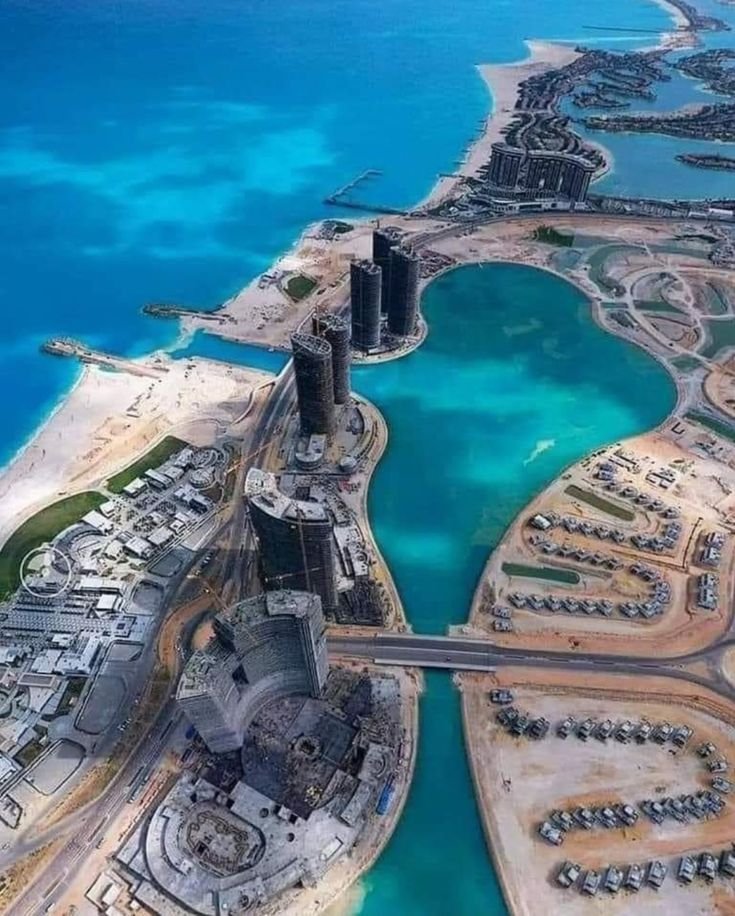
Seasonal rentals make this one of Egypt’s most profitable investment zones, with annual returns reaching up to 15% in popular tourist developments. Projects near Al-Alamein City and Ras El Hekma are seeing particularly high occupancy and rental yields.
Fifth Settlement & New Alamein City:
Both areas have shown continuous price growth exceeding 20% annually over the past two years, driven by high demand, premium finishes, and expanding services.
These figures clearly demonstrate that investors who enter early in well-planned developments can achieve significant profits surpassing many regional markets, including the UAE.
Seventh: Future Outlook for 2026 and Beyond
Experts predict that 2026 will mark a major turning point for Egypt’s real estate market, as numerous national projects near completion, infrastructure continues to improve, and Gulf investments flow more heavily into the country.
The UAE, meanwhile, will remain attractive for investors seeking fast, stable returns and a well-regulated environment, but it’s unlikely to offer the same high-growth potential currently available in Egypt.
When comparing real estate investment in Egypt vs. the UAE, Egypt stands out in several key areas:
-
Higher return on investment (ROI)
-
Lower entry costs
-
Broader long-term growth opportunities
While the UAE continues to be a luxury destination suited for large-scale investors, Egypt emerges as the smarter, more profitable, and secure choice for those seeking real, sustainable gains in a rapidly developing market.
Frequently Asked Questions (FAQ) about Real Estate Investment Comparison Between Egypt and the UAE 2026
1. What is the expected return on real estate investment in Egypt for 2026?
The expected annual return on real estate investment in Egypt in 2026 ranges between 10% and 18% in strong residential projects such as the New Administrative Capital and New Alamein City. This return is higher than most Arab markets, thanks to strong local demand and flexible payment plans that attract more buyers and investors. With annual price growth between 15% and 25%, Egypt remains one of the most promising real estate markets in the region.
2. What is the average return on real estate investment in Dubai?
In Dubai, the average annual return ranges between 6% and 9%, sometimes slightly higher in luxury projects. However, higher property prices and administrative fees reduce the net profit margin compared to Egypt, especially for medium-budget investors.
3. Which is better for investment in 2026: Egypt or the UAE?
It depends on your investment goals. Generally, Egypt offers higher long-term profitability due to lower entry costs, massive local demand, and ongoing urban expansion. The UAE, on the other hand, provides more market stability, but its growth has matured, resulting in relatively lower returns.
4. Why is real estate investment in Egypt considered safer?
Because Egypt’s market is driven by real, sustainable local demand, not short-term speculation. The government continues to expand national urban projects, ensuring steady growth. Additionally, real estate in Egypt serves as a safe hedge against inflation and currency fluctuations, preserving the value of money over time.
5. Is investing in Dubai still profitable in 2026?
Yes, it remains profitable—especially in high-end and well-located projects. However, the market has become more competitive and saturated, meaning the profit margins are smaller compared to earlier years and lower than those in Egypt.
6. What is the minimum capital required to start investing in Egypt?
You can start investing with as little as $50,000 USD in projects in the New Administrative Capital or New Cairo, often with installment plans up to 10 years, making Egypt accessible even for beginner investors.
7. What is the average cost of entering Dubai’s real estate market?
The average entry point for Dubai’s real estate market is around $250,000 USD, with down payments ranging from 20% to 30% of the unit’s value. This makes Dubai’s market more suitable for high-capital investors.
8. Can high rental returns be achieved in Egypt?
Yes, rental yields in Egypt’s new cities—such as the New Administrative Capital and North Coast—can reach 12% to 15% annually, particularly in tourist or centrally located developments.
9. What factors affect investment returns in both markets?
Returns depend on several factors: project location, developer reputation, payment plans, local demand, and tenant profile. In Egypt, growth is driven by population expansion, while in the UAE, it’s influenced by tourism and foreign investment.
10. Is real estate investment in Egypt open to foreigners?
Yes, Egypt allows foreign ownership in many new cities and tourist developments, particularly in the New Administrative Capital and New Alamein, with simplified procedures and attractive incentives.
11. Are there property taxes in Egypt?
No significant annual property taxes apply to residential real estate in Egypt, and registration fees are minimal. This means net investment returns are typically higher than in many other Arab countries.
12. How do currency fluctuations affect real estate investment in Egypt?
While currency fluctuations can pose short-term challenges, they often make real estate more appealing as a value-preserving asset. Foreign investors benefit twice—from currency differences and from property appreciation over time.
13. Is Dubai better for short-term investment?
Yes, the UAE market is better suited for short-term investments, especially in hotel apartments or properties near tourist attractions, where rental income is fast and stable. However, Egypt is better for long-term growth and higher returns.
14. What are the best Egyptian cities for real estate investment in 2026?
The top-performing cities include:
New Administrative Capital
New Alamein City
New Cairo
6th of October City
These locations are witnessing strong demand and consistent price growth due to government-led development.
15. How can I choose the right real estate project to invest in Egypt?
Consider the following factors:
Project location and proximity to key facilities.
Developer’s reputation and track record.
Expected ROI and payment flexibility.
Local rental demand.
Working with a trusted real estate agency can help you identify the best investment options.
16. Are there differences in property ownership laws between Egypt and the UAE?
Yes. In Egypt, full ownership is generally available to citizens and foreigners in approved areas. In Dubai, foreign ownership is limited to designated Freehold Zones, such as Dubai Marina and Downtown Dubai.
17. What role does the Egyptian government play in supporting real estate investment?
The government plays a major role through national mega projects like the New Administrative Capital and New Alamein, developing modern infrastructure and transport networks. These initiatives boost investor confidence and create a stable environment for real estate growth.
18. What are the main risks in each market?
In Egypt, key risks include currency fluctuations and occasional delays in project delivery, though government oversight is reducing these.
In the UAE, the main risks come from global market volatility and oversupply in certain areas.
19. Will Egypt’s real estate market continue to grow after 2026?
Yes. Egypt’s urban development plans extend to 2030 and beyond, with ongoing expansion in smart cities and coastal projects. This ensures continued growth in both property values and rental returns.
20. What is the most important advice for investors in 2026?
If you’re seeking high returns and long-term growth, Egypt is the better choice, particularly in the New Administrative Capital and New Alamein City.
However, if you prefer fast stability and moderate returns, the UAE may suit you better—though it comes with higher entry costs.

